



When a sales representative discovers that an item listed as "in stock" is physically missing from the shelf, or when order fulfillment is delayed due to staff manually searching through warehouse racks, the root issue extends far beyond basic storage. In most cases, it stems from a fragmented operational flow that fails to connect receiving, putaway, picking, packing, shipping, and physical inventory audits. Therefore, a comprehensive evaluation of Odoo for warehouse management and barcode operations must assess the system's ability to control physical stock movements across every operational touchpoint rather than merely reviewing scanning screens or quantity reports.
Odoo ERP provides a fully integrated Inventory module that synchronizes seamlessly with Sales, Purchase, Manufacturing, and Accounting applications. This makes it an ideal platform for enterprises transitioning from disconnected spreadsheets and verbal instructions to structured, measurable warehouse workflows. However, achieving maximum operational value depends on optimal layout design, master data cleanliness, precise routing and permission setup, and role-based staff training. The ERP system does not replace operational discipline; rather, it provides the digital framework to enforce and monitor it.
Core Capabilities of Odoo Warehouse Management
Odoo operates on the fundamental principle that inventory is not a static number. Stock can be available, reserved for a sales order, in transit from a supplier, pending quality inspection, or stationed at a specific bin location within a warehouse. This granular visibility provides operations managers with actionable control across multiple facilities, distribution centers, or retail branches.
Organizations can configure multi-warehouse structures with defined internal locations—such as receiving docks, quality holding zones, high-velocity storage areas, scrap locations, and staging bays. Furthermore, Odoo supports advanced inventory routing rules, such as moving incoming stock from receiving to quality check before putaway, or picking goods from specific zones prior to consolidation. This level of process control is invaluable for wholesale distributors, retailers, discrete manufacturers, spare parts suppliers, and project-based enterprises managing stock across multiple job sites.
The operational advantage lies in complete traceability: every inventory movement requires a defined reason, a source document, and an assigned user. When a purchase order is received, available quantities update according to pre-configured operational rules. When a sales order is confirmed, stock is automatically reserved. During internal transfers, items remain fully trackable between locations. This eliminates repetitive status inquiries and transforms inventory discrepancies into actionable analytical data.
Balancing Route Configuration and Process Complexity
Enterprises can start with a streamlined setup for single-warehouse operations—moving goods directly from receiving to stock—and progressively introduce multi-step workflows, such as quality control or 3-step pick-pack-ship operations, as transaction volumes grow. While this architectural flexibility is a major strength, enabling excessive features prematurely can create unnecessary operational friction.
A high-volume fulfillment center dispatching hundreds of orders daily benefits significantly from multi-step picking, packing, and shipping workflows, as each team operates within a clear functional scope. Conversely, a service business holding limited stock will achieve higher inventory accuracy with direct, simplified routes. The criteria for success is not how many features are activated, but how closely system routes mirror actual operational throughput and internal control requirements.
Real-World Evaluation of Odoo Barcode Operations
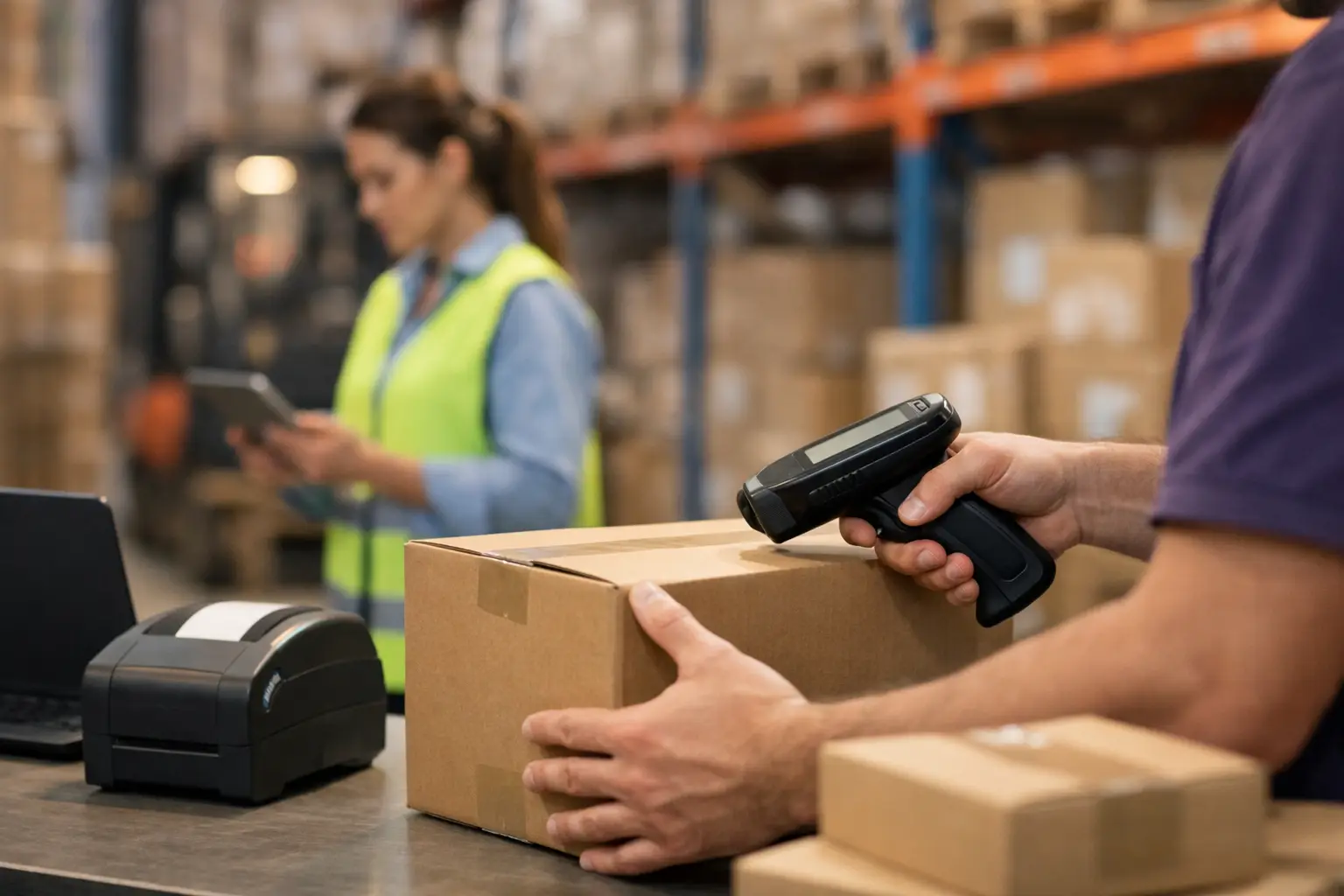
Deploying Odoo Barcode connects physical floor execution directly to system records. Instead of manually typing item descriptions or searching product databases, warehouse staff use mobile barcode scanners or compatible mobile applications to scan products, bin locations, and work orders. Barcode scanning can be implemented across receiving, internal transfers, picking, shipping, and inventory counts—drastically reducing manual data entry errors and accelerating processing speeds.
The benefits are particularly evident in warehouses managing similar SKUs, variant products, or multiple units of measure. Barcode scanning eliminates the risk of selecting incorrect product variants and verifies both expected bin locations and required quantities in real time. For retail and distribution environments, this speeds up order preparation while maintaining strict quality verification standards.
However, barcode technology cannot fix poor master data hygiene. If a single product is registered under multiple internal references, or if warehouse locations lack standardized barcode labels, scanning devices will simply digitize operational errors faster. Prior to investing in barcode hardware, mobile scanners, and thermal label printers, organizations must standardize product catalogs, units of measure, bin location nomenclature, and lot/serial tracking rules.
Batch, Lot, and Serial Number Traceability
In regulated industries—such as food and beverage, pharmaceuticals, automotive spare parts, and consumer electronics—tracking item quantities alone is insufficient. Organizations require full visibility into specific lot numbers or serial numbers received, sold, installed, or returned. Odoo natively supports end-to-end lot and serial tracking, enabling complete lifecycle visibility for warranty management, expiration date tracking, and targeted product recalls.
Implementing serial-level tracking requires a deliberate operational commitment. While unit-level tracking maximizes inventory accuracy, it adds scanning steps during receiving and dispatch. Lot tracking offers a balanced approach for bulk goods, batch production, or perishable products with expiration dates. The chosen tracking depth must align with regulatory compliance standards and quality management protocols rather than feature availability alone.
System Integration: Creating a Connected Supply Chain
Odoo's true strength emerges when warehouse operations are fully synchronized with the broader enterprise ecosystem. Confirmed sales orders automatically generate delivery orders and reserve stock based on priority rules. Purchase orders provide receiving teams with clear visibility into incoming shipments. In manufacturing environments, raw material picking is tied directly to production orders and actual consumption records.
Furthermore, native integration with Odoo Accounting aligns physical stock movements with automated inventory valuation, cost of goods sold (COGS) postings, and financial reporting. Connecting Odoo to e-commerce platforms, localized shipping carriers, and retail Point of Sale (POS) terminals eliminates manual order re-entry and prevents stockouts caused by delayed inventory updates.
For enterprises operating in Saudi Arabia, aligning warehouse workflows with statutory requirements—such as localized e-invoicing and tax compliance procedures—is equally essential. Operational success depends on architecting an end-to-end data model that unifies logistics, sales, and financial compliance into a single operational flow.
Strengths, Limitations, and Customization Governance
Odoo excels for organizations seeking a unified, scalable ERP platform that integrates warehouse management natively with Sales, Procurement, and Finance. It is particularly effective for multi-warehouse distributors and retail chains that require clear user access permissions, centralized stock visibility, and tailored approval workflows.
However, complex operations featuring heavy warehouse automation, specialized material handling equipment (MHE), or high-frequency sorting systems requiring thousands of scans per hour require deeper technical evaluation. In such environments, organizations must conduct rigorous floor testing, evaluate network coverage and device latency, and determine whether specialized hardware APIs or custom modules are necessary.
Custom development must be managed with strict governance. Modifying the system to replicate obsolete manual habits preserves inefficient practices and increases future software upgrade costs. Best practices dictate distinguishing between customizations that enforce core internal controls, regulatory compliance, or competitive advantages, and non-essential requests that can be streamlined through standard Odoo workflows and user training.
Essential Implementation Milestones for Risk Mitigation
A successful Odoo Warehouse implementation requires establishing operational ownership before technical configuration begins. Management must define process owners for each inventory stage, establish clear authorization levels for stock adjustments, specify when incoming goods transition to sellable inventory, and document procedures for handling returns and damaged goods.
Prior to system go-live, project teams should validate four critical operational pillars:
- Master data cleansing: Purging duplicate SKUs, standardizing units of measure, and verifying barcode associations.
- Warehouse layout mapping: Standardizing physical bin locations and installing clear barcode labeling across all storage zones.
- Scenario testing: Conducting User Acceptance Testing (UAT) for receiving, internal transfers, picking, returns, and inventory counts using live operational data.
- Role-based user training: Delivering targeted hands-on training for floor staff, accompanied by post-go-live operational support.
Global Solutions provides an end-to-end implementation methodology—guiding enterprises through diagnostic GAP analysis, workflow alignment, module configuration, custom development, and system integration, followed by data migration, role-based training, and ongoing technical support. This structured approach ensures warehouse operations remain stable through initial physical counts, peak order volumes, and unexpected operational exceptions.
Key Post-Go-Live Operational KPIs
Measuring warehouse automation success requires tracking key performance indicators (KPIs) that reflect real-world operational efficiency. Executive leadership should monitor:
- Inventory accuracy rates (system stock vs. physical counts).
- Order fulfillment cycle times (order placement to dispatch).
- Shipping pick-pack error rates.
- Stock adjustment variance values.
- Dead stock ratio and inventory turnover velocity.
- On-time internal transfer completion rates.
Cycle counting deserves special emphasis. Implementing continuous cycle counts by location or product category is far more effective than shutting down operations for annual physical inventory audits. When combined with mobile barcode scanning, defined bin locations, and automated approval workflows for variances, inventory auditing transitions from a disruptive event into a routine operational control that maintains data integrity across Sales, Purchasing, and Finance.
The objective is not simply activating advanced software features, but establishing a reliable daily execution model. When physical items, barcode labels, and staff responsibilities perfectly align with your Odoo ERP system, warehouse management transforms into a reliable operational asset that supports sustainable enterprise growth.