


When sales figures differ between the POS and accounting, and inventory requires manual reconciliation at the end of the day, the issue is not just workload—it’s the lack of proper integration between systems. This is where Odoo integration with Foodics becomes an operational decision, not just a technical feature. The goal is simple: unify sales, inventory, and finance under one consistent operational view.
Why Odoo Integration with Foodics Matters for the F&B Industry
In restaurants and cafés, speed of service does not eliminate the need for backend control. As branches, SKUs, and sales channels grow, manual work and small errors accumulate significantly.
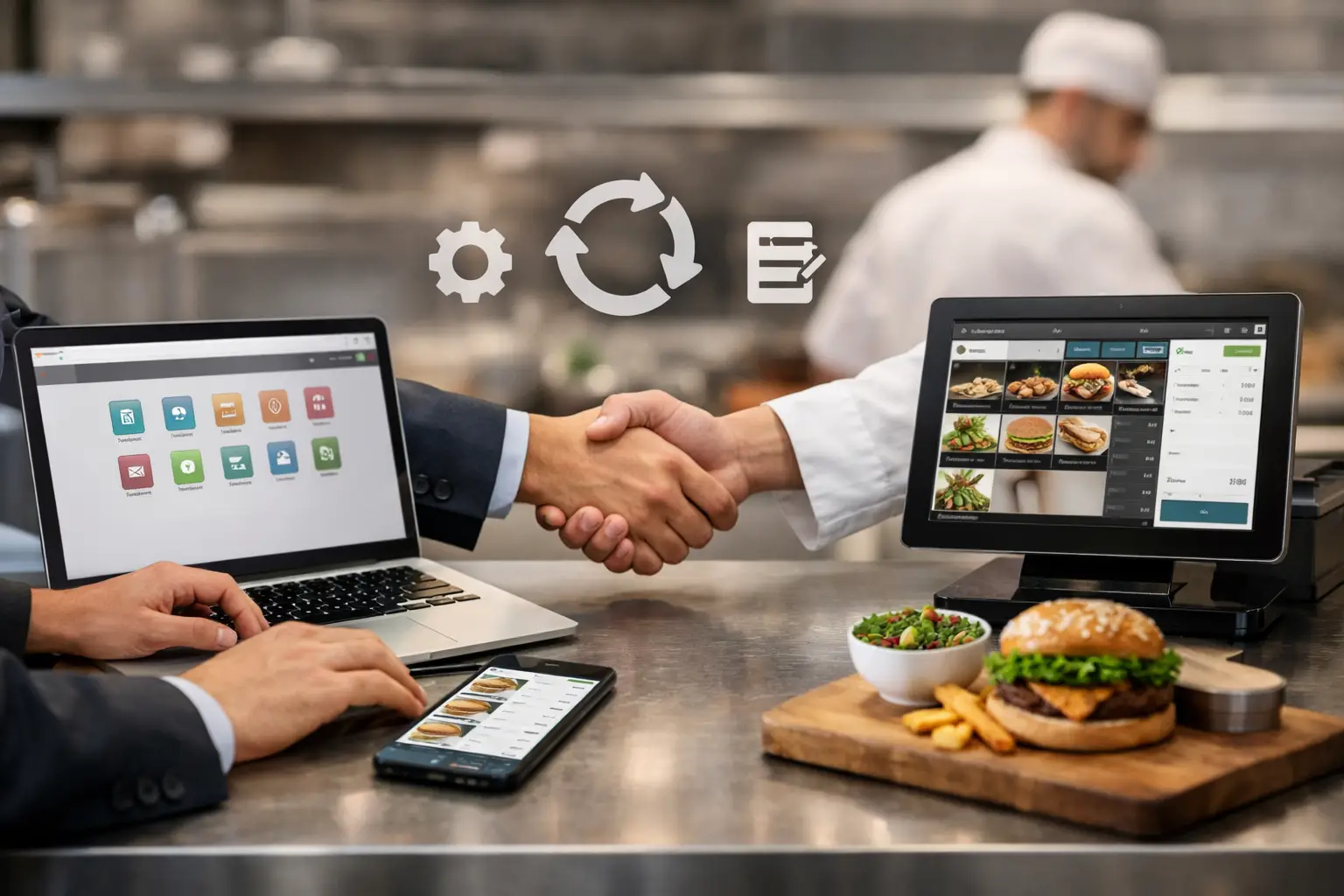
Foodics excels in front-end restaurant operations and POS management, while Odoo provides a full ERP layer including accounting, inventory, purchasing, HR, and reporting. When properly integrated, operational data flows seamlessly from POS to ERP without repetitive manual input.
This type of integration is not only for large chains. Even mid-sized businesses benefit through better cost tracking, inventory accuracy, financial closing, and branch performance visibility.
What Does Odoo–Foodics Integration Actually Cover?
Success is not measured by technical connectivity alone, but by defining what data moves, when, and under what business logic.
Typically, integration includes syncing sales data (invoices or daily summaries), taxes, payment methods, discounts, and service charges. Product structures and classifications must also be aligned to avoid reporting inconsistencies.
Inventory is often the most sensitive part. Some companies use Odoo as the main inventory source, while others manage certain operations in Foodics and sync financial and stock impact to Odoo. The right model depends on operations complexity.
Where Does the Operational Value Appear?
The first benefit is eliminating manual data entry, improving both efficiency and accuracy.
The second is better inventory visibility. Businesses can track actual consumption more effectively and detect discrepancies faster.
The third is financial clarity. Daily or periodic closing becomes more accurate when sales, taxes, and payments are unified within one ERP system.
For multi-branch operations, integration simplifies consolidation and enables standardized performance analysis.
Pre-Implementation Is More Important Than Implementation
The biggest mistake is assuming integration is just an API connection. The real work starts with defining system ownership: where products are managed, where pricing originates, and how transactions are recorded.
These are operational governance decisions, not just technical ones. Without clarity, integration becomes superficial and fails to solve real business challenges.
This is why serious projects start with GAP analysis to map workflows and define a suitable integration model.
Common Challenges to Address
One major challenge is data structure mismatch. POS systems prioritize speed, while ERP systems require deeper structure for accounting and reporting.
Another challenge is synchronization timing. Real-time syncing is not always optimal—batch syncing (e.g., daily closing) may be more efficient in high-volume environments.
Handling exceptions is also critical. Failed syncs, canceled orders, and returns must be properly managed to ensure system reliability.
What Does a Successful Project Look Like?
A successful project starts with business goals: faster financial closing, better inventory accuracy, or unified branch management.
Implementation is typically phased: starting with core sales and financial data, then expanding to inventory and advanced reporting.
This approach reduces risk and allows teams to validate results progressively.
When Is Integration the Right Choice?
For single-branch, low-volume operations, full integration may not be necessary. But as operations scale, integration becomes essential.
This is especially true when management needs real-time reporting and compliance accuracy.
Choosing the Right Implementation Partner
Integration impacts sales, inventory, and finance, so it requires a partner who understands both technical and operational aspects.
The right partner analyzes workflows, aligns data, handles customization when needed, and provides post-go-live support.
What Should You Prepare Before Implementation?
Organizations should define branch structure, product lists, payment methods, closing procedures, and data ownership in advance.
Clear requirements lead to faster implementation and more accurate testing.
Ultimately, Odoo–Foodics integration is not just a system project—it is a step toward unified operational and financial decision-making based on reliable data.