One of the biggest challenges restaurants and cafés face after scaling is not sales itself, but what happens afterward. Orders are recorded in Foodics, but their impact on inventory, accounting entries, branch reporting, and purchasing remains scattered across multiple systems and files. This creates operational and financial pressure.
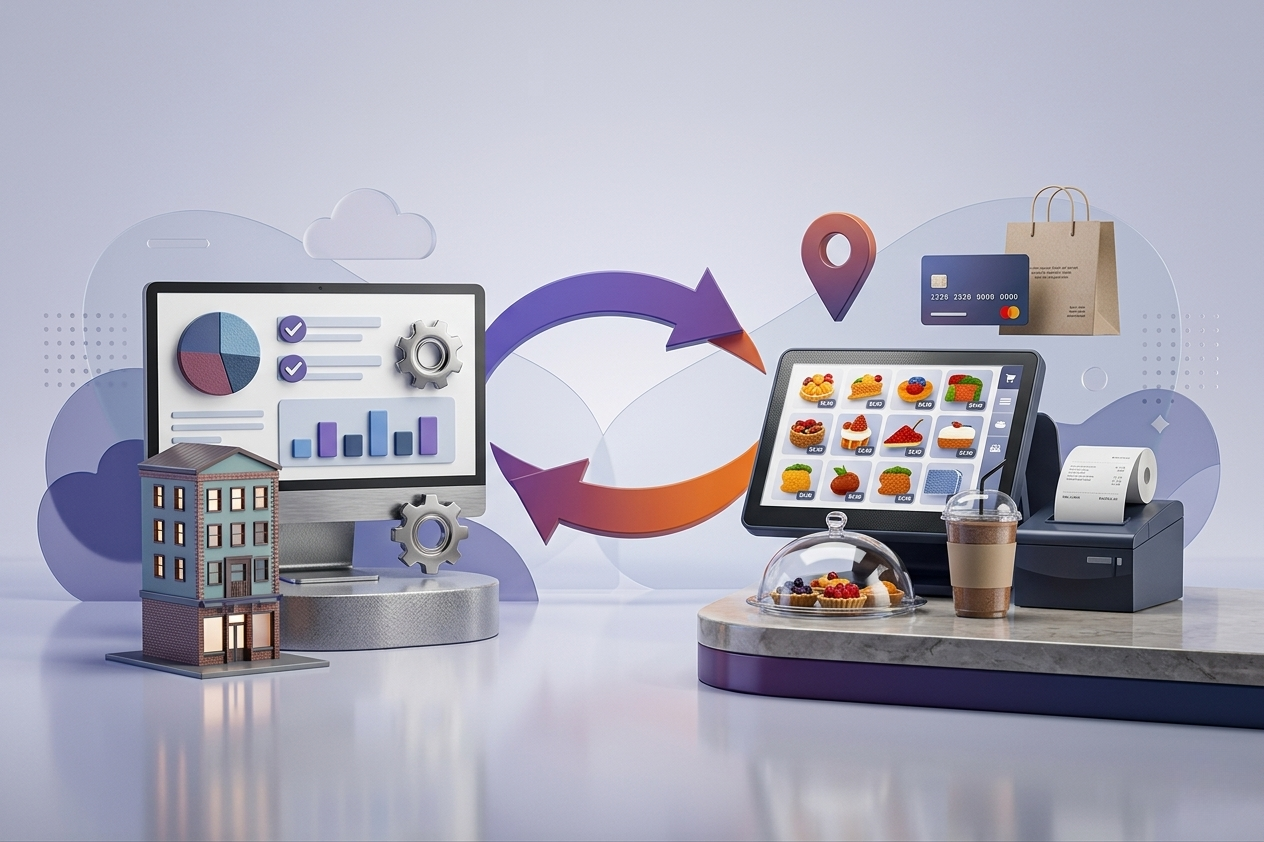
If your organization uses Odoo for ERP and Foodics for POS and branch operations, the real value of integration is not just data transfer. It is about building a unified workflow where sales, inventory, and accounting move under one logic, reflecting real-time branch performance instead of relying on end-of-day or end-of-month adjustments.
Why Do Businesses Integrate Odoo with Foodics?
The reason is practical. Foodics excels at order management, cashier operations, and branch workflows. Odoo, on the other hand, is stronger in accounting, purchasing, inventory, HR, and enterprise management. When both systems operate separately, an operational gap appears—costing time, money, and accuracy.
This gap becomes more visible in multi-branch environments, complex inventory scenarios, and structured financial closing requirements.
What Should Integration Achieve?
Integration success is not about having an API. It is about aligning workflows. Sales data must move correctly into accounting and inventory with clear timing and structure.
Some businesses prefer daily aggregated entries, while others need detailed transaction-level data. The right choice depends on operational complexity and reporting needs.
Payment methods must also be clearly structured—cash, cards, digital wallets, and delivery platforms—to ensure proper reconciliation.
Inventory integration is often the most sensitive part. Some businesses only require financial posting, while others need deep integration reflecting ingredient consumption through recipes.
Direct vs Aggregated Posting
Real-time posting provides faster visibility but increases data volume and complexity. Aggregated posting simplifies accounting but requires agreement on reporting detail.
Data Preparation Before Integration
The biggest mistake is assuming integration is purely technical. Data must be standardized: branches, cost centers, products, taxes, warehouses, and payment methods.
Clear ownership of data is critical—where products, customers, and pricing are managed.
Taxes and Compliance
In regulated markets, tax mapping and reporting structure must be designed from the beginning to avoid issues during financial closing or audits.
Implementation Journey
A proper implementation starts with process analysis, followed by data mapping, workflow design, testing, and training.
Testing must simulate real operations including peak hours, refunds, discounts, and daily closing.
Expected Challenges
Differences between POS logic and ERP structure, scalability requirements, and data quality are the main challenges.
Simple vs Advanced Integration
Simple integration may be enough for basic accounting needs. However, multi-branch businesses with inventory tracking and profitability analysis require deeper integration.
Post Go-Live Impact
When done correctly, integration reduces manual work, improves financial accuracy, and provides consistent reporting. It enables better operational control and supports business growth.