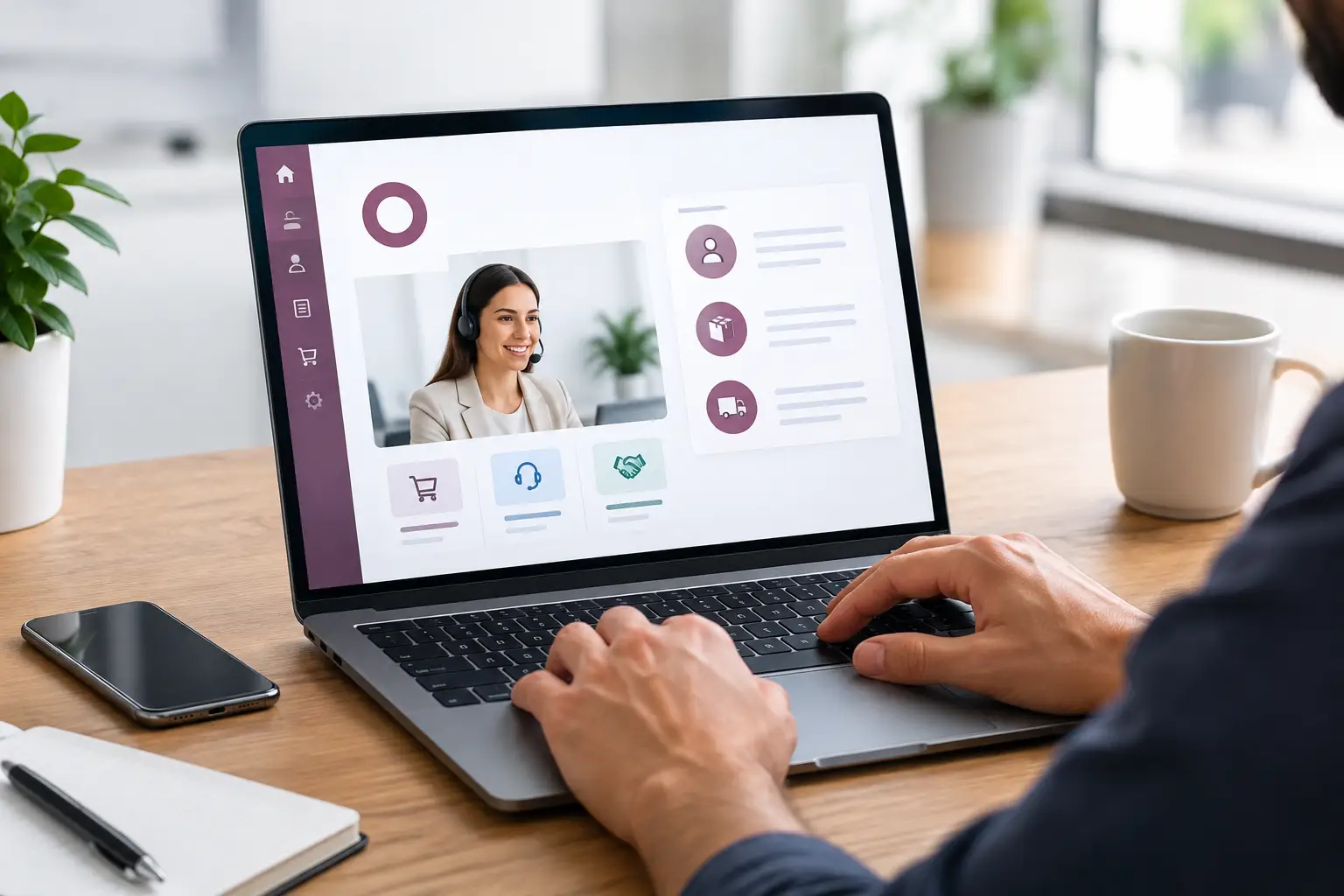
When HR teams rely on static employee spreadsheets, isolated biometric time clocks, and leave requests submitted via email threads, basic operational questions become frustrating bottlenecks: Who is late today? Is the accrued leave balance accurate? Are verified attendance hours ready for payroll processing? A comprehensive review of Odoo HR and Attendance provides a practical answer to this dilemma: the system goes beyond simple data recording by integrating daily employee lifecycles directly into a unified Enterprise Resource Planning (ERP) environment aligned with enterprise policies.
The true benchmark of any HR system is not the quantity of available menus, but its ability to convert working shift schedules, leave policies, and approval hierarchies into auditable, error-free operations. Odoo stands out as an optimal solution for organizations seeking to minimize manual data entry and connect HR workflows directly to accounting, project management, and operations—provided implementation is preceded by a thorough operational GAP analysis rather than relying on default settings.
Odoo HR & Attendance Scope: What Does the Architecture Cover?
Odoo’s Human Resources ecosystem comprises interconnected modular applications that can be activated as business requirements evolve, including Employee Profiles, Attendance, Leave Management, Recruitment, Performance Appraisals, Expense Claims, and Payroll (depending on system edition and local country localization). This modular flexibility ensures growing firms do not need to deploy a massive enterprise suite on day one, though it requires implementation teams and management to define business workflows carefully.
Within employee profile records, foundational administrative and employment metadata is organized cleanly—including department hierarchies, reporting managers, job positions, work locations, employment contracts, and contact information. The true value lies in leveraging this centralized data across automated approval routes, security permissions, and executive reporting. For example, leave requests automatically route to direct supervisors, while access to salary details or confidential documents remains strictly restricted to authorized roles.
The Attendance application supports flexible check-in and check-out methods tailored to job-site requirements, such as direct portal logins, physical tablet kiosks on site, or direct integration with biometric hardware, RFID card readers, and access control devices. Integrating physical hardware should never be treated as a secondary IT task; final record accuracy depends on verifying employee identities, configuring shift rules, handling anomalies, and ensuring reliable data transfer protocols between hardware devices and Odoo.
Unlocking Practical Operational Value
The operational benefits become clear when an organization transitions from viewing attendance as an isolated logging event to treating it as an operational input impacting leave accruals, payroll calculations, and project costing. HR managers can identify incomplete logs, late arrivals, or overtime hours in real time according to pre-set policies, rather than consolidating multiple files at month-end. Centralized record-keeping also eliminates disputes resulting from undocumented manual edits.
The Time Off application gives management clear visibility over accrual balances, pending requests, and approval statuses. Leave types, accrual rules, and approval workflows can be configured to match corporate HR policies. However, long-term success depends on resolving subtle policy details upfront: Does accrual start from the hire date or the start of the calendar year? How are unpaid leaves calculated? Who holds permission to adjust balances after approval? Documenting these parameters before system configuration avoids complex retroactive data adjustments later.
For organizations managing multi-branch networks, field teams, or project-based operations, the value doubles when attendance links directly to operational analytics. Management can compare actual logged hours against scheduled plans, track team availability, and allocate labor costs directly to project cost centers when data models are configured properly. While not every business requires this depth of integration, it is essential for contracting, professional services, manufacturing, and logistics firms where labor hours directly drive profit margins.
Attendance Management: Beyond Simple Clock-In and Clock-Out
A common implementation mistake is assuming biometric hardware resolves attendance management on its own. Hardware simply records a timestamp; the ERP system must interpret that timestamp according to operational policy. Does the system allow a grace period? Are lunch breaks deducted automatically? How are overnight shifts spanning midnight calculated? Does overtime require pre-authorization or calculate automatically?
Odoo supports flexible work patterns via configurable schedules, shifts, and attendance rules. However, operational complexity increases with flexible hours, field work, or multiple site locations. To manage this effectively, classify employees into distinct operational profiles during initial design: office staff, shift workers, field teams, and flexible/executive roles. Each profile requires tailored attendance rules and approval paths rather than forcing a single rigid configuration across the workforce.
Establishing clear audit protocols for attendance corrections is equally important. In daily operations, employees may forget to clock out, devices may experience network outages, or sync delays may occur. The correct approach is requiring a formal modification request with a stated reason, supervisory approval, and a complete audit trail—rather than granting open edit permissions to multiple users. This approach preserves operational flexibility without compromising report accuracy.
Payroll & Saudi Regulatory Compliance: Critical Points for Audit
Many organizations aim to transition seamlessly from attendance tracking to automated payroll processing. While this is a logical goal, payroll integration should not commence until pay structures, allowance rules, statutory deductions, and benefit accruals are formally defined. Configuring Odoo Payroll requires establishing contract parameters, earnings rules, and precise accounting journal mapping, while Saudi Arabia's local labor regulations may require specialized functional setup and testing.
In the Saudi business environment, basic system fields alone are insufficient. Workflow configurations, reports, and procedures must be validated against Saudi Labor Law, leave entitlements, contract regulations, and corporate data privacy standards. Implementation teams must separate statutory compliance rules from internal HR policies and technical configurations—preventing incorrect rule setups that could affect monthly payroll runs.
Executing a parallel test payroll run using historical data or a sample employee group is highly recommended prior to full deployment. The objective extends beyond matching net salaries; it validates attendance hours, unpaid leave deductions, housing/transport allowances, and general ledger postings. Seamless accounting integration transforms payroll into an accurate cost-control tool rather than a basic monthly export exercise.
Identifying Customization and Integration Requirements
Odoo excels when an enterprise adapts standard software capabilities to streamline operational workflows rather than replicating legacy manual forms word-for-word. While many requirements are met using native settings, specific workflows require custom module development or third-party integrations. Evaluating these requirements during initial design balances operational impact against future system upgrade costs.
Key areas to evaluate during operational GAP analysis typically include:
- Integrating biometric time and attendance hardware to ensure stable data synchronization, ID mapping, and exception handling.
- Multi-tier approval workflows tailored by branch, department, or administrative authorization limits.
- Custom employment contract templates, localized employee master fields, and internal HR reporting formats.
- Linking attendance logs and shift schedules directly to project analytic accounts, cost centers, or payroll processing.
Not every custom request is necessary. If internal procedures can be streamlined to fit standard Odoo logic, doing so is far more sustainable than building complex custom code. However, where custom functionality supports regulatory compliance or core operational advantages, a fully documented, well-tested customization represents a sound investment.
User Experience, Reporting & Access Rights
Odoo offers an intuitive interface for employees, managers, and HR administrators alike: employees view personal records and request time off; managers review team requests and monitor attendance; HR administrators oversee system configurations, compliance, and enterprise reporting. However, maintaining this user-friendly experience relies entirely on well-designed security permissions. Overly permissive access exposes sensitive personnel data, while overly restrictive settings cause user frustration and lead teams back to manual communication channels.
User roles should be defined and tested early: Employee, Direct Manager, HR Officer, Payroll Specialist, and System Administrator. Executive reporting must focus on delivering actionable insights—such as branch-level absenteeism trends, upcoming leave liabilities, or unapproved overtime hours waiting for managerial sign-off.
End-user training is an essential component of implementation success. Employees require short, clear instructions on portal navigation; line managers need to understand the operational impact of delayed approvals; and HR teams require hands-on training for processing exceptions, closing payroll periods, and auditing system reports. Effective training ensures the system becomes an actively adopted operational tool.
Is Odoo HR the Right Fit for Your Organization?
Odoo HR is particularly effective for organizations seeking to unify human resource management with core business operations—eliminating isolated HR software that cannot communicate with accounting, project management, or field services. It provides a scalable foundation for growing enterprises with multiple branches or business units, allowing additional ERP applications to be deployed seamlessly over time.
Conversely, if an organization's requirements are limited to a basic time clock for a very small staff—without plans to manage leaves, approval hierarchies, payroll, or integrated reporting—a lightweight standalone tool may suffice. Furthermore, firms with highly intricate, non-standard shift rotation rules require detailed functional analysis before deployment to ensure software flexibility translates into manageable, transparent configurations.
Global Solutions offers end-to-end Odoo implementation services—encompassing operational GAP analysis, custom module development, system integrations, data migration, role-based user training, and ongoing technical support. In HR projects specifically, successful outcomes stem from thoroughly understanding real-world employee workflows before building system menus or reports.
An effective first step is gathering a one-month operational data sample: attendance raw logs, leave applications, manual adjustment requests, shift schedules, and payroll inputs. Converting this real data sample into structured test scenarios ensures precise system configuration—establishing Odoo as a reliable, scalable platform for workforce and time management.